Home › Our Process
Our Process
Inspect and test, contain, remove safely, dry, fix the moisture source, rebuild, test again.
Every mold rebuild and water damage rebuild we do runs the same seven steps, in the same order — because skipping one is how mold jobs fail. The sequence below is the whole job: inspect and test, contain, remove safely, dry, fix the moisture source, rebuild, and test again. It’s also the difference between this company and a tear-out crew: the process ends with a finished room and verified results, not an empty wall cavity and a contractor to find.
The seven steps
Inspect & test
A licensed assessor finds the mold, the moisture source, and how far it goes. Testing where it changes the plan.
Contain
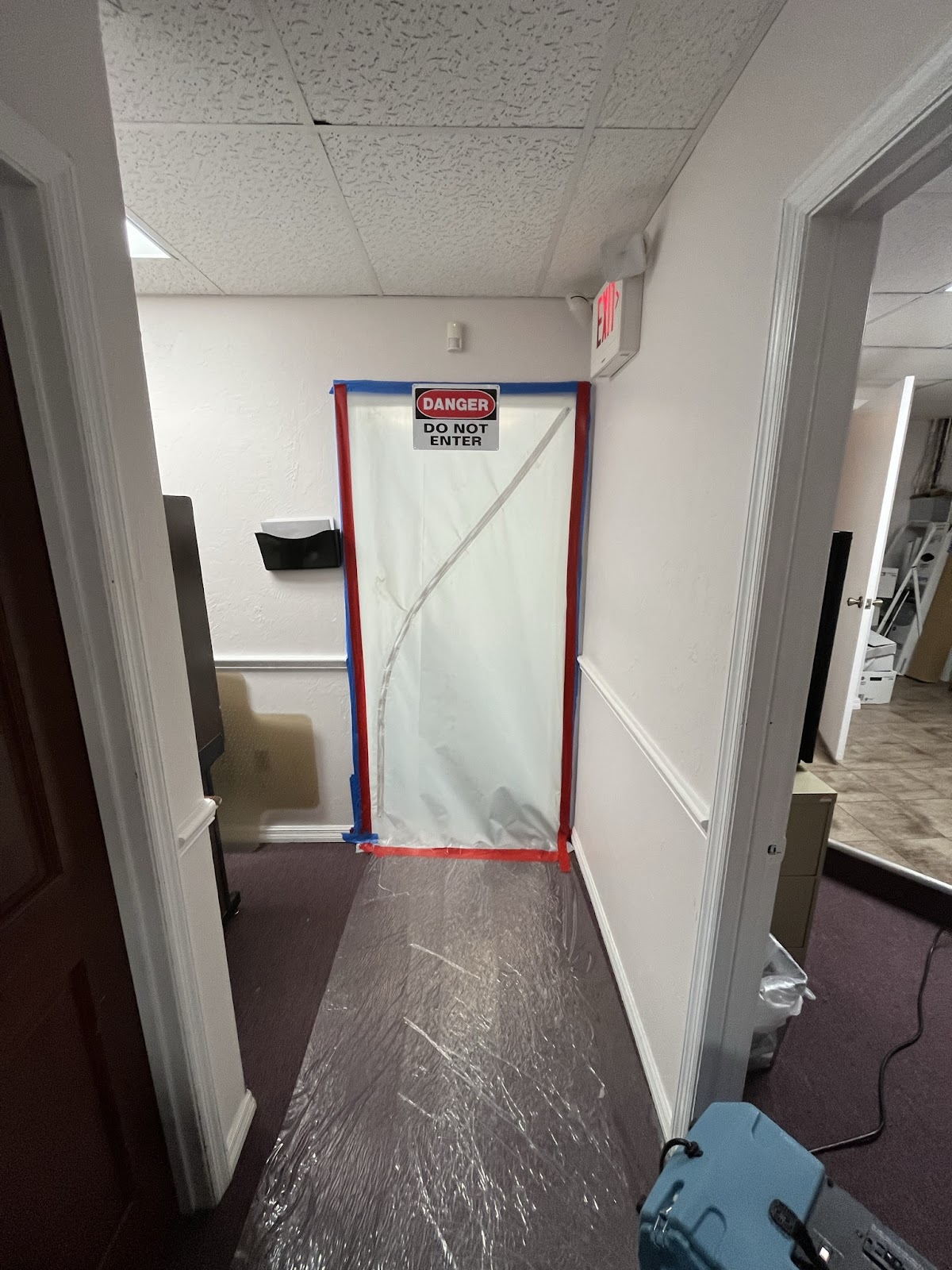
The work area is sealed off with plastic containment and negative air, so spores stay put while work happens.
Remove safely
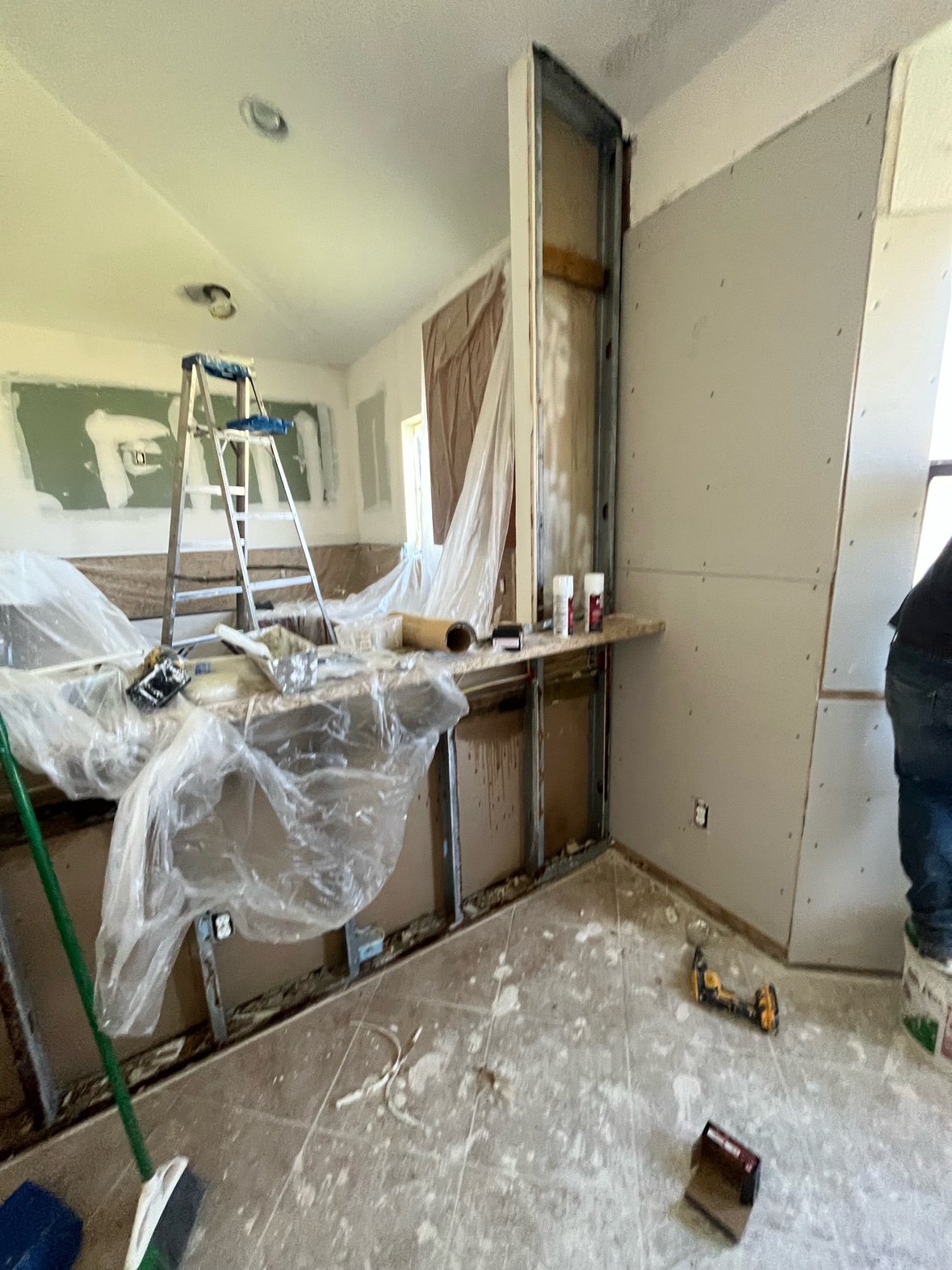
Moldy material comes out and is bagged; surfaces that stay are treated. Crews work protected, house stays livable.
Dry
Dehumidifiers and air movers dry the structure, verified with moisture readings — not by feel.
Fix the moisture source
The leak, condensation, or humidity problem that started it gets fixed. No source fix, no lasting result.
Rebuild
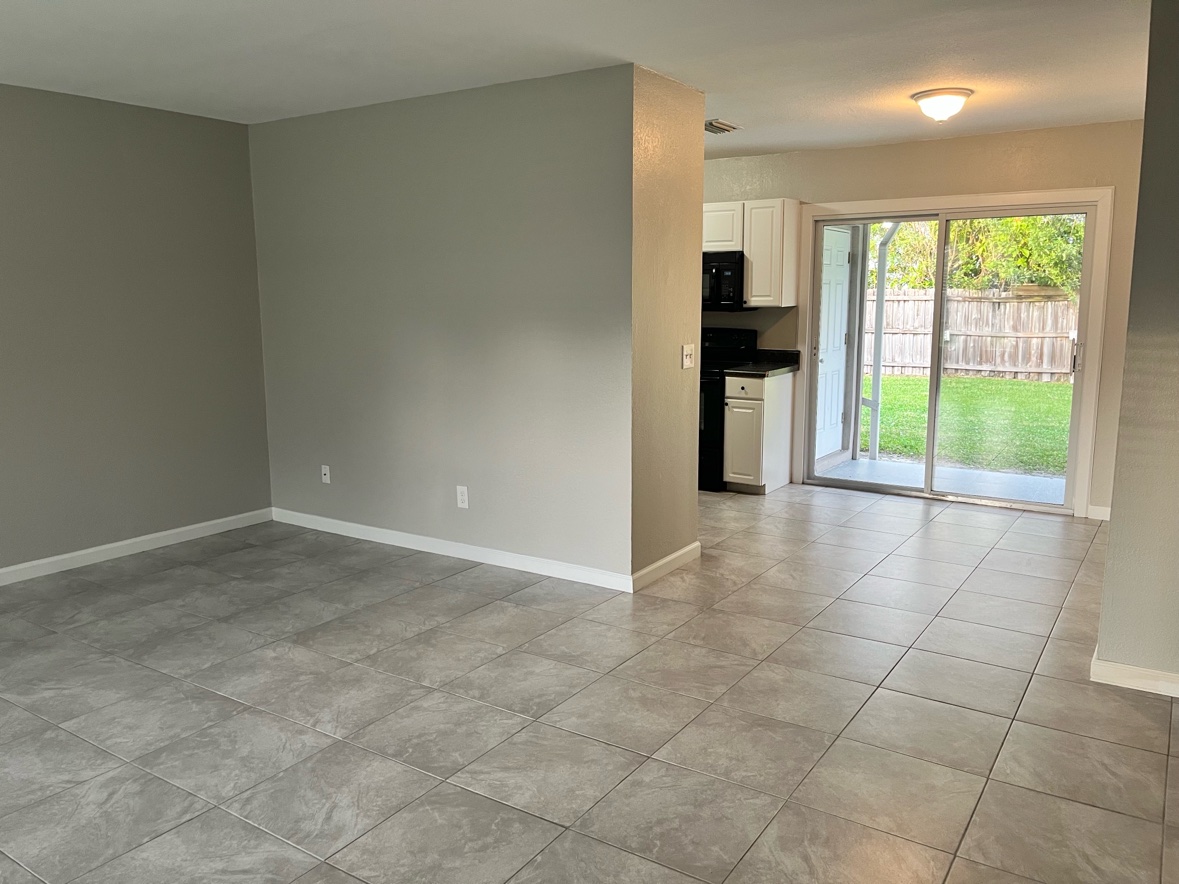
Framing, drywall, tile, cabinets, and finishes go back under our Certified Building Contractor license.
Test again
Post-remediation testing verifies the job before we call it done.
Why the order matters
Remove before you contain, and spores spread through the house. Rebuild before you dry, and you seal moisture — and the next mold colony — inside the wall. Skip fixing the source, and the whole job repeats itself within a season. The steps are boring on purpose: they are what makes the result hold. When you’re ready, book an inspection and step one starts.
Watch the process on a commercial job
Twelve seconds on a commercial ceiling repair: the space fully protected — floors covered, furniture wrapped — while the crew works overhead. That protection goes down before any material comes out.
Frequently asked questions
How long does mold remediation take?
Most residential mold remediation jobs take one to three days for the removal itself once containment is set — a small area can be finished in a day, while larger or multi-room jobs take longer. Drying and the rebuild add time after that. We give you a realistic schedule in writing before we start, so you know what to expect.
Do I need mold testing before removal?
Not always. If mold is clearly visible and the moisture source is obvious, testing may not change the plan. Testing earns its keep when mold is hidden, when you smell mold but cannot see it, when a home sale or an insurance claim needs documentation, or when you want verification after the work. As a licensed Mold Assessor (MRSA4171), we will tell you honestly when testing is worth it — and when it is not.
What causes mold to keep coming back?
Mold comes back when the moisture that fed it was never fixed. Cleaning the surface without stopping the leak, the condensation, or the humidity just resets the clock. That is why every job we do includes finding and fixing the moisture source and drying the structure — and why we test again at the end.