Home › Mold Remediation
Mold Remediation
The full remediation process — source fixed, mold removed, room rebuilt, results verified.
Mold remediation is the complete process — and it is what separates a job that stays done from one that has to be done twice. Homeowners searching for mold remediation Fort Pierce are usually dealing with more than a stain: growth that keeps returning, a musty smell that never leaves, or damage found during a remodel. Mold Removal Plus handles the whole process under one roof: licensed assessment (MRSA4171), remediation (MRSR4242), and the rebuild under our Certified Building Contractor license (CBC1262255).
Remediation vs. removal — why the process matters
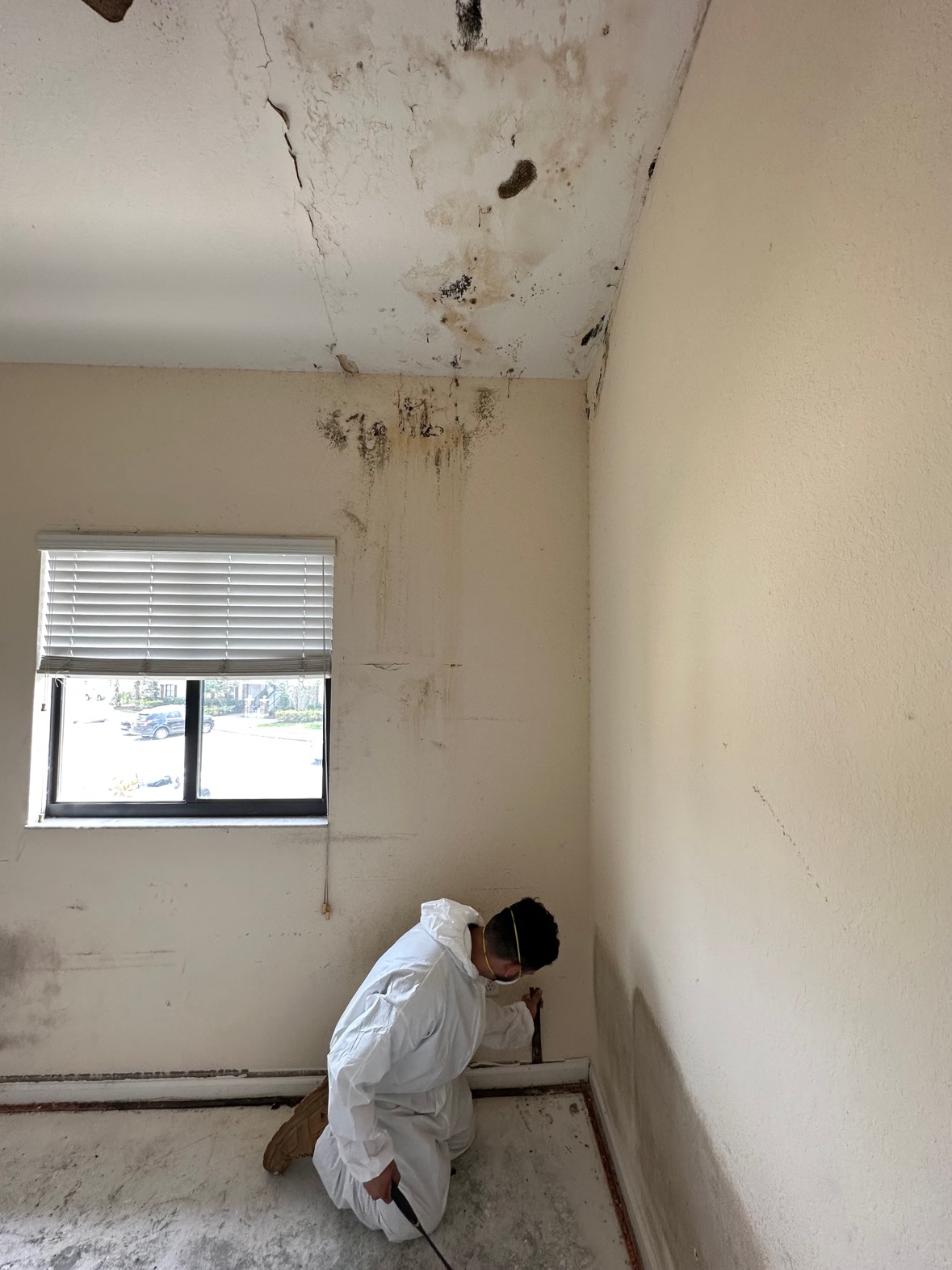
Anyone can tear out moldy drywall. Remediation is everything around that moment: identifying the moisture source first, sealing the area so spores don’t travel, negative-air filtration while material comes out, treating what stays, drying the structure to verified levels, and confirming the result with post-remediation testing. Skip a step and the mold returns — usually in the same spot, because the water that fed it is still there. Our full sequence is laid out on our process page.
When a job needs full remediation
- Growth covering a large area, or spread across multiple rooms
- Mold that returned after a previous cleaning or removal
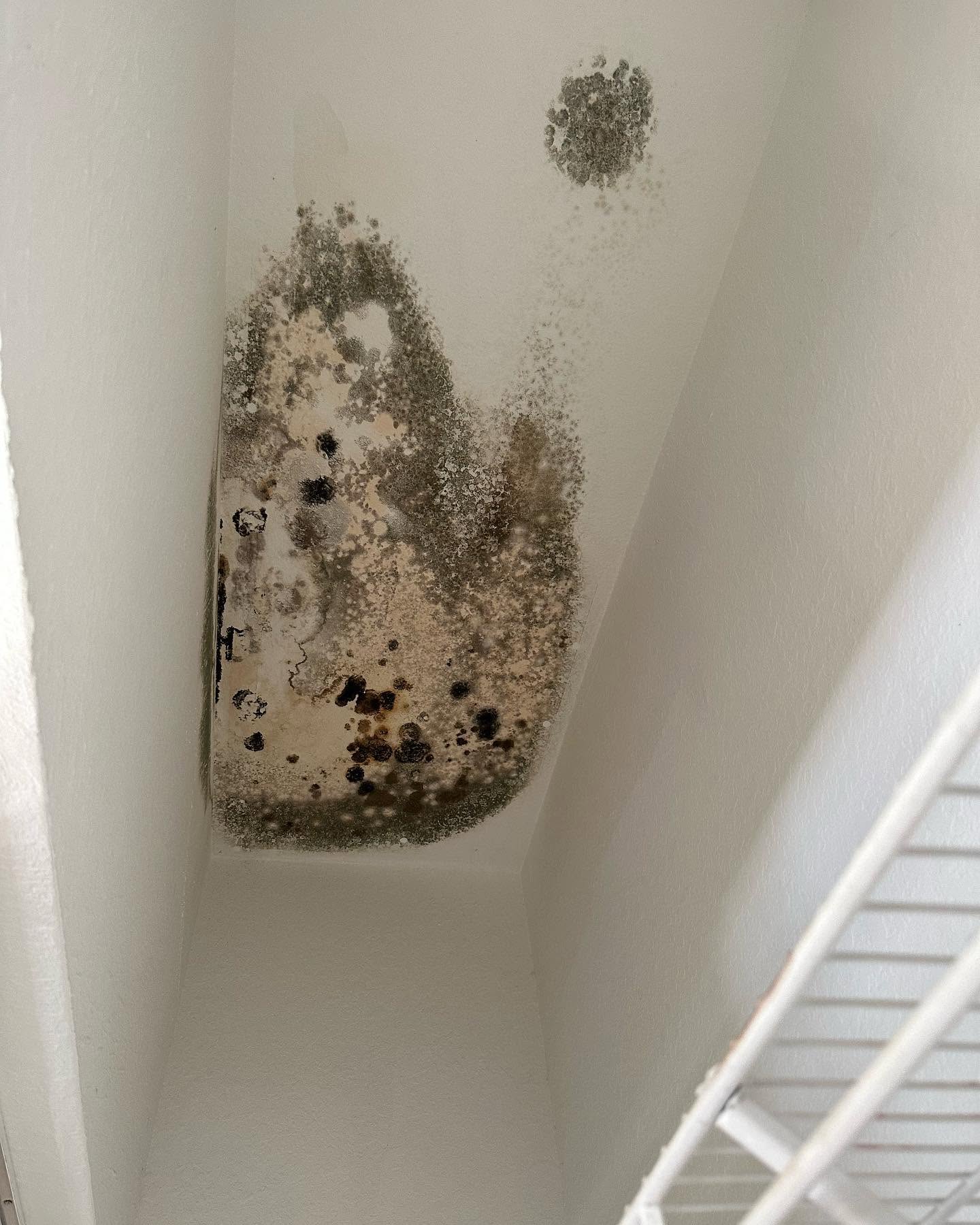
- Hidden mold inside walls, ceilings, or the AC system
- Water damage that sat wet for days before it was found
- Jobs an insurance claim or home sale needs documented properly
The remediation process, step by step
Inspect & test
Licensed assessment, moisture readings, and testing where it is needed.
Contain
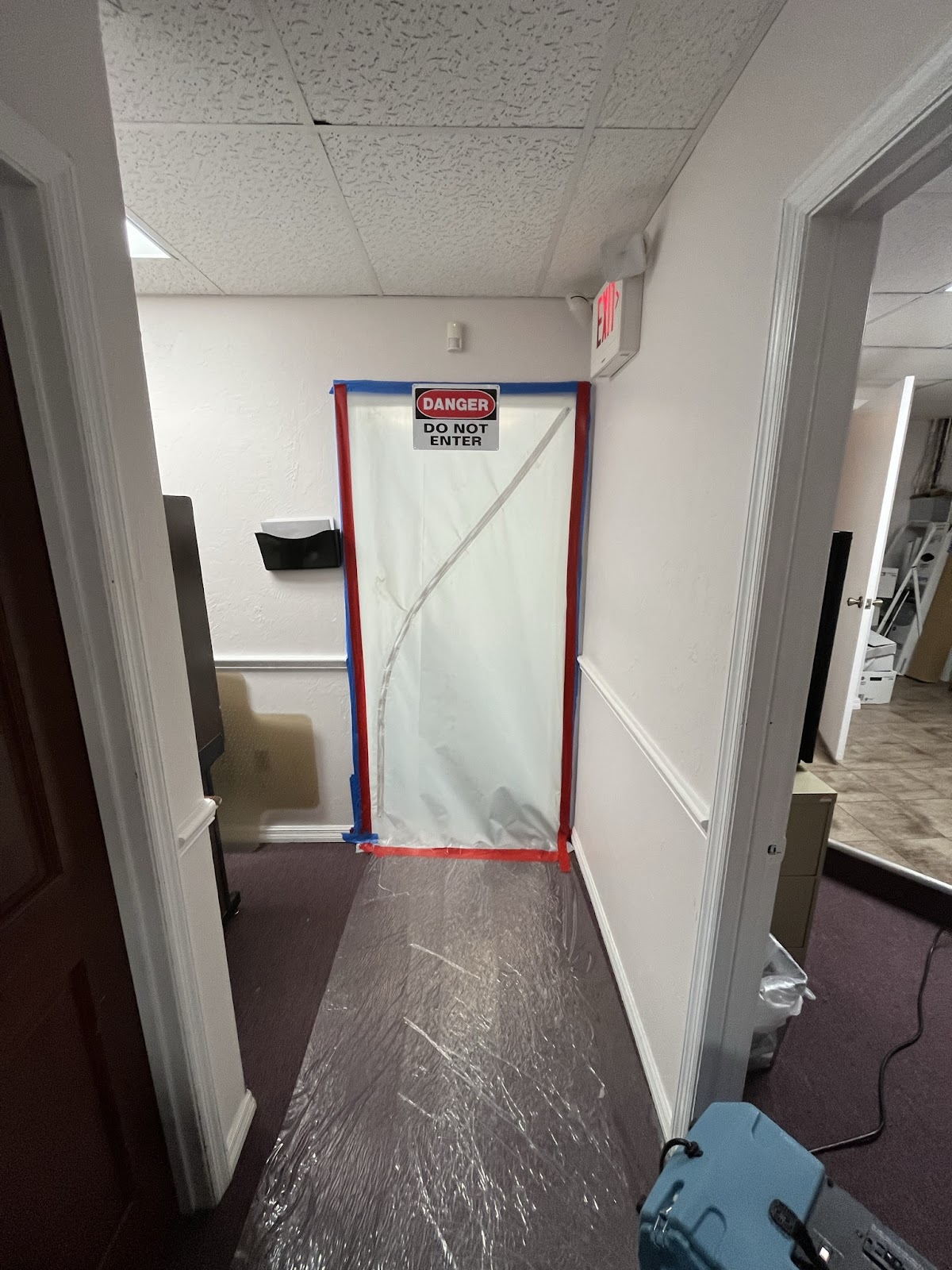
Sealed containment and air scrubbers so spores don’t spread.
Remove safely
Affected material removed and surfaces treated.
Dry
Structure dried and verified dry before anything closes up.
Fix the source
The leak or moisture problem behind it gets fixed.
Rebuild
Drywall, rooms, and finishes put back together.
Test again
Post-job testing confirms the job is done.
On the job
Frequently asked questions
How long does mold remediation take?
Most residential mold remediation jobs take one to three days for the removal itself once containment is set — a small area can be finished in a day, while larger or multi-room jobs take longer. Drying and the rebuild add time after that. We give you a realistic schedule in writing before we start, so you know what to expect.
Do I have to leave my house during mold remediation?
Usually not. We seal the work area off with containment and run air scrubbers, so the rest of the home stays livable during most jobs. For large jobs, heavy growth, or anyone with serious respiratory concerns, we may recommend staying elsewhere while the removal itself is underway — and we will talk that through with you before we start.
What causes mold to keep coming back?
Mold comes back when the moisture that fed it was never fixed. Cleaning the surface without stopping the leak, the condensation, or the humidity just resets the clock. That is why every job we do includes finding and fixing the moisture source and drying the structure — and why we test again at the end.
Do I need mold testing before removal?
Not always. If mold is clearly visible and the moisture source is obvious, testing may not change the plan. Testing earns its keep when mold is hidden, when you smell mold but cannot see it, when a home sale or an insurance claim needs documentation, or when you want verification after the work. As a licensed Mold Assessor (MRSA4171), we will tell you honestly when testing is worth it — and when it is not.